English
 What I will learn?
By the end of this session, participants will be able to:
1- Define floppy infant and describe its clinical characteristics.
2- Outline the prevalence of hypotonia in infants.
3- Discuss the common etiologies of hypotonia in infancy and childhood.
4- Differentiate between central and peripheral hypotonia.
5- Describe the steps involved in the clinical evaluation of a hypotonic infant, including history, physical examination, and developmental assessment.
6- Discuss the differential diagnosis of hypotonia, including genetic, metabolic, infectious, and structural causes.
7- Review the diagnostic workup for a hypotonic infant.
8- Outline the multidisciplinary approach to the management of hypotonia, including medical, surgical, and rehabilitative interventions.
1- Define floppy infant and describe its clinical characteristics.
2- Outline the prevalence of hypotonia in infants.
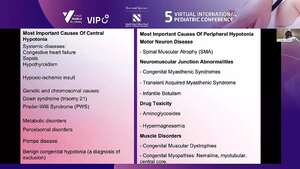
3- Discuss the common etiologies of hypotonia in infancy and childhood.
4- Differentiate between central and peripheral hypotonia.
5- Describe the steps involved in the clinical evaluation of a hypotonic infant, including history, physical examination, and developmental assessment.
6- Discuss the differential diagnosis of hypotonia, including genetic, metabolic, infectious, and structural causes.
7- Review the diagnostic workup for a hypotonic infant.
8- Outline the multidisciplinary approach to the management of hypotonia, including medical, surgical, and rehabilitative interventions.